
FAC Literary Magazine
An FAC 50th Anniversary Collection of Poetry and Short Fiction
Fall 2026
A Letter From the Director
The Art of Being Here
Lately, we do not have enough time. We are all moving through media and information so rapidly.
These poems and stories invite us to pause and to be present, to sit down and consider the world on its own terms and to meet it halfway, in all of its physicality and complexity.
These pieces remind me of the sunshine in my office that visits me like a friend. The work contained herein reminds me of the lost art of slow time. As this collection attests, the literary arts are alive and well in Frederick.
There are many diverse voices, perspectives and styles represented here that reveal the rich fabric of Frederick and the vibrant internal landscapes.
Fifty years of creative community is a remarkable reason to celebrate and we do that with this literary magazine. The pieces here prompt us to reflect on what has been nurtured over the last five decades at the Frederick Arts Council–the freedom to explore and the courage to express.
It is a human impulse to create and we need our artists now more than ever: we need their independence, their unique expressions, especially now when the role of the human voice –and the future of humanity itself–is in question.
Creatively yours,

Executive Director
Frederick Arts Council
Guest Editor
Dorian Elizabeth Knapp
Dorian Elizabeth Knapp is the author of three poetry collections: Causa Sui, winner of the 8th Annual Three Mile Harbor Book Award; Requiem with an Amulet in Its Beak, winner of the 2019 Jean Feldman Poetry Prize; and The Spite House, winner of the 2010 De Novo Poetry Prize. She is the founding director of the Low-Residency MFA at Hood College and lives in Frederick, Maryland with her family.
The Frederick Arts Council’s literary magazine celebrates the creativity and voices of local writers, poets, and storytellers. Through a collection of original literary works, the magazine provides a platform for artistic expression, highlights Frederick County’s vibrant literary community, and connects readers through the power of words.
Read the printed version of the Literary Magazine here
Table of Contents
Fragment of Portrait of Man
Susan Rose April
Here, Not There
Roseann Abdu
The View Of An Angel
Kevin Coyle
The Swan
Joshua Jones Lofflin
Bonfire
Seraphina Wilson
Obsidian
Caitlyn Kelly
Rhythm of The Rocks
Gnarly Artly
Kintsugi Daughters
Teresa Cochran
Just A Seed
Stephanie Comegys Miller
Everywhere
Alyssa Dahle
I Awaken
Adrien Gehring
Catch a Falling Star
Roderick Deacey
Escaping Home
Louisa Diggs
Natural Habitat
Andrea Dulanto
Eternal
Chris Grooms
POV: Message From The Lynching Trees
Elayne Hyman
Courage Is Quiet
Michael Douglas Jones
Charlie
Amanda Linehan
Aneleh
Jevaun-Dean Linton
Mermaids in the Grass
Jeanne McDermott
Man Overboard, Calling From Oceans Within
Jessica McHugh
Release
Michael McNeill
Swimtime
JJ Mikel
Invisible Woman
Christine Mosere
Recipe
Carolyn Nair
Consider My Rituals
Tayler Parsons-McCoy
Downpour
Olivia Phillips
Untitled Elegy
Joseph Reid-Fitzgerald
Nobody
Sarah Rubinstein
A Name
Shabnam Samuel Thakar
A Good Time Was Had By All
Nancy Luse
An-Ti-Quees
Jack Lynch
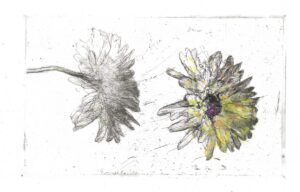
Fragment of Portrait of Man
Susan April Rose
How do you map the geography
when the path is an esker
and the water is dangerous?
I think you must have wings.
Here, then, is the map of me:
My fabric is velvet
My wine is dry, fruity, with a hint
of the ruined vineyard
My grandfather was a thief
My brook is Black Brook
My lake is Long Lake
My tree is Catalpa
My weather is a hurricane
with no name
My snow is asbestos
My clouds are high cirrus
My song is Sober
My street is Osgood
My desert is the Desert of Maine
My honor is negotiable
My rock is granodiorite with
mica and muscovite that steal
glints from the sun
My home is the mills
My air is more soot than oxygen
My arm hurts
My dirt bike route skirts
the Nickel Mine
My mother is gone
My father fought fires
My arm hurts so much I want
to tear it off.
I have no park
I have no song
I’ve missed the bus
My home is snow
My soot is air
The path is dangerous
The esker winds and winds
and disappears in the Nickel Mine.
Here, Not There
Roseann Abdu
Be here, not there. With me. In this moment. It’s perfect, really. Peaceful. Quiet, except not. Birds greet the morning—sweep-weep-weep-weep. A helicopter spins far above in the gray sky. A car whirrs by the house. You tap, tap, tap your keys at the other end of the couch. The dog licks his chops as he settles against my thigh. The clock ticks.
I feel tired, still blurry from sleep, but content and especially grateful for my dark, charry coffee as it does its work. I start to think about what the day holds—and then remind myself to stay here, not there, a little longer.
The View of an Angel
Kevin Coyle
As I look over this city of steeples and chapels, I smell city air, fresh as day. I see people walking from place to place. On these very streets, I once delivered newspapers from door to door. Oh how I remember those summers of my youth. Is there a hope for today?
Where is our world headed? These questions a mortal may ask. The saving hour I cannot know, but perhaps I can impart wisdom, some knowledge gleaned, some insight from my years. In my life, I witnessed the anxieties of the age: wars and persecutions, sorrows, and troubles of all kinds. But, in the midst of it all, I witnessed little acts of love, little acts from the heart, little things that seem to whisper: “Don’t give up, a brighter future is sure to come.” In this world, my dear friends, you will have tribulation, but keep on doing good, keep loving, and keep comforting, for your labor is never in vain. The world awaits a cosmic peace, a day when all will be made well, but I assure you, if you can bring peace to just one soul, you can leave this world a better place. In your walk on this Earth, that is really all you can do, the most important thing you can do. Now it is time for me to retire to the heavens for another day, but until we meet again I say, “Good luck and farewell.” May love guide you wherever you go and may the angel in you shine for all the world to see.
Inspired by “Earthbound” painting by William Cochran and Paul F. Wilson in downtown Frederick
The Swan
Joshua Jones Lofflin
Bonfire
Seraphina Wilson
A flick of the wrist,
Flames engulf
The tiny wood stick
As you throw it to a pile of branches
Orange,
Red,
Yellow.
Explode into a painting
crackling in the wind
A mural,
A story,
A life.
The smoke
twirling and twisting up to the sky
Dancing and moving
To the song only they can hear.
A song,
The only thing they will ever hear
Before they dissolve into the air
Playing their music to whoever cares.
So gather around the fire,
And talk and sing
To the music you don ‘t even know is there.
Obsidian
Caitlin Kelly
I am obsidian, truest black –
my midnight feet across the creaky floor,
shrinking, hiding
from that musty smell,
that seething hatred,
his empty eyes.
I am obsidian, inky pitch –
terror,
ad nauseum, ad infinitum,
unwavering in his pervasive
perverseness,
in a hot, shrinking room,
prison.
I am obsidian, darkest self –
insides scooped out,
that pulsating pain,
a dreamlike feeling,
begging
to disappear into the night,
that inky pitch,
that truest black.
I am obsidian, no one now –
my midnight feet into the fog,
holding, clutching
that heaviness,
that thought –
through is not
the only way out.
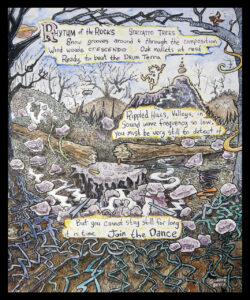

Kintsugi Daughters
Teresa Cochran
They are alchemists,
all of these
long-injured girls
who mended themselves,
and turned those visible seams into gold.
When they shatter again—
you know that they will—
it won’t be at the place
where the gold erased
the cracks before.
But how to rise high
when you stuff
all your wealth
into structural flaws?
Still, shine on
sweet daughters
gilt into wholeness.
You blind
when you step t’ward the sun.
Just A Seed
Stephanie Comegys Miller
You think you’re “just” a seed in the ground because you have yet to see what you will become.
In fact, to you, that is all you are—a seed in the ground. It is dark where you live. You have no idea that there is anything called “above ground” or “light,” because being a seed in the ground is all you have ever known.
No one has come by to tell you what you will become. Yet you will become more than a seed in the ground. It is inevitable. Even if you cannot yet see what you are made of, you are what you are meant to be in this moment, and you are also becoming. Then the water comes.
You realize there is something greater than you, something above. Life begins to stir as the water seeps through the soil. It reaches deep within, awakening something that has always been there. A sense of purpose begins to sprout. A knowing that you are not “just” a seed. There is more.
Little by little, joy rises within you because you know there is more—and you want it. The desire comes from somewhere deep inside. You must know what exists beyond the darkness you once nestled into as home.
So you reach.
Up. Up. Up and through.
Something greater lies beyond.
And then you break through the ground. Indeed, there is light. There is a whole world. A kingdom. A vastness beyond the boundaries of what you once knew as home.
You see, you were never “just” a seed. You were a seed being watered and growing in a dark place. You were always more than “just” anything.
Whether you could see it or not, it was inevitable that one day you would move beyond believing you were “just a seed.”
And still you would continue becoming.
Everywhere
Alyssa Dahle
Everywhere,
death lies at the
yellow line
flesh, fur, and rubber
empty masks of dazzled despair
Everywhere,
it torches and disappears
our homes and our peers
flame, ash, and rubble
outrageous exercise in expression
Everywhere,
death encroaches—no,
violates—
our safe dwellings
aims at the children of earth
pageanting our fortitude until
inevitably
this spectacle makes way for
another
because absolution and change
are distant cousins,
a constant forgetting
and remembering.
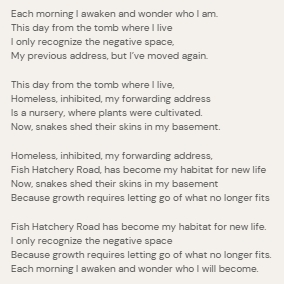
I Awaken
Adrien Gehring
Catch A Falling Star
Roderick Deacey
So, we’re walking along Carroll Creek
& this crazy old guy that was me
was switching from bench to bench,
moving up & down the Creek side,
searching for a particular moment.
It’ll be like that time
when we took our goofball doberman’s ashes
to sprinkle in the Creek at his favorite spot.
We were standing around,
remembering our beloved dog,
with his great sense of humor
& the way he would bring you one of his toys—
carefully selected by him from PetSmart,
always the squeaking kind.
Then, just as you were going to throw it or hide it,
he would snatch it back, toss it in the air,
catch it & run around the house at top speed,
squeaking it furiously
before repeating the whole ritual,
sometimes with the same person,
sometimes with a different person.
Clearly, his spirit hadn’t quite left his ashes
for when I tipped them into the Creek,
a strong gust of wind came out of nowhere,
swirled around & blew the remains all over us,
into eyes, hair, ears, open mouths & down necks.
It was Greyson’s last joke!
“Don’t worry!” cried the old man that was me—
“This tasty cloud is merely a bunch of atoms,
forged billions of years ago
deep in the hearts of dying stars…
These are not ashes—
they’re stardust!”
For Greyson—such a good boy!
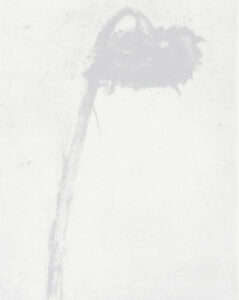
Escaping Home
Louisa Diggs
“Namibia? I have never met someone with a Namibian passport”. “I get it all the time”, I responded as we waited in line to pass through the United States border on Canadian soil. She looks well groomed. A face is full of character. She looks stern, but her eyes reveal her gentleness. I cannot help but think of my mother. They share the same complexion and hair style. But it is the character in her face
that tells of internal struggles that makes her a carbon copy of my mom.
There appears to be a computer problem and the lineup grows. I am starting to grow nervous because my flight is in 30 minutes. Sensing my irritation, she inquires about my upcoming trip to Washington DC.
“We share the same continent,” she says. I was surprised because she looks Indian and has an American passport in her hands.
Seeing the puzzling look on my face, she explains that she was born and raised in Uganda but left when Idi Amin came to power and kicked out all Indians.
“Well, it is my first time meeting an Indian Ugandanian from the Amin era,” I said smiling. She laughed, the sternness disappearing from her face for the first time. “There aren’t many of us left to tell the story.”
The line shuffled forward a few inches before stopping again.
“I was only a child when everything changed,” she continued. “One day we belonged. The next day we were told we did not.” I knew enough about East African history to understand what she meant. The
Asians who had lived in Uganda for generations had built businesses, raised families, and knew no other home. But, in 1972, they were given ninety days to leave. Some carried a single suitcase. Others abandoned homes they would never see again.
“My father thought it was impossible,” she said. “He kept saying, ‘’This is our home. We were born here.’ He believed reason would prevail.”
“But it didn’t?” I asked softly.
She shook her head, and a sadness settled on her face. “No,” she said softly. I almost had to lean in to listen. “History doesn’t always make room for reason.”
There was no bitterness in her voice, only the fatigue of someone who had repeated the story enough times to remove the sharp edges. I wondered how many strangers had unknowingly walked past her without realizing they were passing someone who had once watched her entire life fit into one suitcase.
“My family eventually settled in America,” she said. “We survived. We rebuilt. We were luckier than many. My dad felt it more. I was a child. He lost everything. His great-grand parents were the first generation that moved there. It was the only home he knew.”
She paused before adding quietly, “But you never stop wondering who you would have become had you stayed.”
Her words settled between us.
I understood that question.
Growing up in Namibia under apartheid, I too had often wondered who I might have become had history chosen a different path. We spend years believing our personalities are entirely our own, yet so much of us is shaped by politics, borders, wars, and decisions made by people we will never meet.
“People always ask where I’m from,” she smiled. “If I say America, they hear my accent and ask again. If I say Uganda, they ask how an Indian came to be born there. Sometimes I think I have spent my whole life explaining my existence.”
I laughed.
“I know the feeling.”
When I tell people I am from Namibia, I usually receive a puzzled look before launching into a geography lesson. Sometimes I wonder if I am introducing my country or defending it.
The border officer called the next passenger.
Our line moved forward.
She looked at my passport one last time.
‘I suppose we have something in common after all.”
“What’s that?”
“We both come from countries that taught us that belonging is more fragile than
we imagine.”
I nodded.
Neither of us had chosen the circumstances of our birth, yet both of us had inherited histories that would forever shape how we answered the simple question, ‘Where are you from?’
A few minutes later we reached separate inspection booths. She waved before disappearing into another queue. We would probably never meet again.
As I hurried toward my gate, I thought about how easily strangers reveal themselves to one another.
Perhaps it is because strangers carry no expectations. They cannot remind us of who we used to be, nor hold us hostage to the versions of ourselves we have carefully constructed. They simply witness us for a brief moment in time.
I never learned her name.
She never learned mine.
Yet, somewhere between Canadian soil and an American border, two Africans – one born Black in Namibia and the other born Indian in Uganda – found themselves comparing the invisible luggage they had carried far longer than their passports.
Perhaps that is what strangers recognize in each other. Not our differences, but the quiet hope that someone else might understand the parts of our story we are too tired to explain to those who already think they know us.
Natural Habitat
Andrea Dulanto
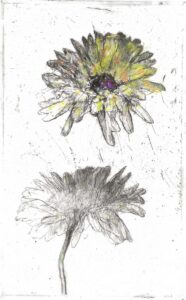
Rapunzel keeps a list of everything outside her window
Geese, dragonflies, clouds, beanstalks, two children following bread crumbs
a group of deer
which is called
she had to google it
a herd
Also known as a bunch a mob a parcel or a rangale
“he sat and smiled benevolently amidst a rangale of grazing deer”
that can’t be a real word
Once she saw the neighbor across the street
go into the front yard at midnight with a shovel
and a pair of ruby slippers
burying the evidence
like no one was watching
but who would believe her
and isn’t that how they survived
Pretending they didn’t notice the flood of hair
outside her window.
Eternal
Chris Grooms
Surrounding you, moths to flame
as your light fades,
we talk and laugh, all charades,
silently deciding which gods to blame.
Death awaits in the doorframe
as the grief cascades,
and a wind flutters the shades.
Will we all end the same?
The coming days are unknown.
And while the void, all-consuming,
seems to swallow everything,
let our memories be keystones
through the pain, ever looming,
and time cannot erase your name.
POV: Message From the Lynching Trees
Elyane Hyman
Here on Turtle Island’s back,
Now called Mary’s land
We stand
Seasoned by the seasons
We lost our innocence.
Woodlands stand unceded
Perhaps you’ve heard of us:
Cherry, Hickory, Poplar, Pine
Pin Oak, Sycamore, Locust
And Willows that weep,
We cycled many sun trips round
Despite the colonizer’s axe
We felt their saw strip down our sides
Flaying fleshy bark.
Tuscarora, Shawnee, Piscataway, Delaware
First Nations fled.
Though left for dead
We bled
Saplings into soil
A record of remembering
Deeds done.
Wailing women coiled our trunks
While on leaf littered dirt they sat.
Braiding our willowy limbs
Into burden baskets and sleeping mats
We winced at being cut and scored
Made into tables and chairs
We understood the way they felt
Objects turned into stairs
Bent down for another’s climbing.
Listen to our forecast tunes
Of weathered dissonance harmonic
Window rattling gust that croons
Dirges rooted in mist demonic.
Strong, hardy Hickory’s branch was hacked
For smoking meats and cooking
His bonfires could also burn
The flesh of those caught fleeing.
And we have tales to tell:
Of lovers lain beneath our shade
Of laughing young ones chasing round
Of barking dogs chained to our trunks
Of bodies strung up in our crowns
With bulging eyes and purple tongues
Legs trembling …then gone limp.
Of cheering crowds in Sunday suits
With children strapped on shoulders high
Of picnics spread on blanket’s quilt
And swatted flies buzzing round
The blood soaked legs of blacks and browns
Here we’ve known great horror
Standing as we do
To root in stolen Mary’s land
Gone limp and weary too.
First Nations fled, betrayed and plundered
Once proud warriors forced surrender.
We’ve heard the cries of blacks and browns
Called fiends and brutes,
Monsters of the piney woods, all of ill repute
We’ve sniffed their rotting bodies hung
Caressed their strangled necks
That swung
As farmers’ wives and white little girls
Their violence by sheeted men unfurl.
And patty rollers hound the heads
Of wooly haired black boys.
There were no trials, nor justice sought
For bodies black and brown
And sheriffs turned their heads
Away from body broken boys.
In Winter, no sad respite came
Instead we met Jim Crow.
And so
With aching arms and curling leaves
We hid their shame beneath the years
Squalls blew a cooling balm upon
The frosted hearts of relatives
Who went to sleep, afraid to weep
Or mourn
Lest tears and sorrow wipe away
The scourge of being born.
Recording these atrocities Is tiring work we do
But telling truth sustains our growth
On ravaged land through flood and drought
In name for long-sought justice shout!
“Horizon’s change. Our time is now
To witness what we’ve seen
Let willows cease their weeping
And tongues be loosed to speaking
Lest we return to days gone by
Reviving scenes obscene.”
Courage is Quiet
Michael Douglas Jones
Breaking day sun slips through the thornapple branches in jagged cuts of light and night. I rise with its pain, and listen, but Courage does not call out commands, or curse from atop the porch step to the chattel below; she will not wait for reinforcements. Courage whispers, and walks toward the post road where the work will be done. She does not ask to be Courage, as I do; she takes the task at hand and handles it now, so I walk behind her for a time, in the early morning, as the fog lifts beyond the tree line. We are tasked this day to measure the moon, at the ridgetop, a full day’s journey, and the many that stay behind say it cannot be measured, it is beyond our scope, and the demons on the ridge are many. Courage wears the scars and creases of those demons, so I will walk behind her awhile, and ask to be Courage for this one day.
I wear my father’s butternut overcoat, and deep inside the left pocket is the Colt pistol that he turned on himself, in the war before this war. I carry the weight of that Colt, the weight of that coat, the wet wool heavy on my scars and shoulders, and every morning, I reach into its worn pocket, moving my fingers across the blood and oil polished pistol grip, knowing that I am on his path; knowing that his way was thick with thorns and tangled honeysuckle vines, with deep mud, and deeper madness, and I ask to be Courage for this one day.
Courage is quiet, and walks with a steady step through the tall grass, even as the grade steepens near the slip rail, a full furlong before the post road, where the work will be done. I fall behind in the high noon sun, my heavy boots caked with the drying mud of years lost, trudging the circling path of thorn and vine. By late afternoon, Courage is a shrinking silhouette on the west ridge, and I am remembering the cool shade of the hawthorn and the thick sweet scent of honeysuckle, its taste on my lips, so I sit awhile to consider my direction for tomorrow, and move the pistol to my right pocket.
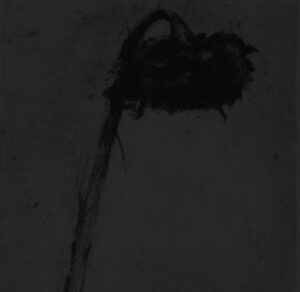
Charlie
Amanda Linehan
Charlie was dead.
He floated at the top of his little bowl filled with neon gravel and a seashell house – that he loved, by the way – but I knew that he had lived a long and prosperous carnival-won goldfish life. We had been pals – a man and his goldfish.
I thought back to the beginning.
It was overcast that day, a little gloomy out, a little cool, the end of summer being pronounced, which is why I went to the carnival that night.
I loved the people watching and the lights and sounds, especially when I was by myself, but I digress.
As I stood by the booth with dozens of tiny fish bowls in the middle of it, with three ping pong balls in my hands, I had no hope of winning.
The first ball bounced high off the rim of the bowl it hit, the second one, not quite as high, but a miss nonetheless, but the third ball… Splash. Right into the colored water.
I picked Charlie out of the tank of goldfish, and felt an odd surge of pride as the carnie put him into a plastic bag filled with a little water. Both because I had won, but also for the life that was now entrusted to me.
I decided to head home right away.
Well, right away after purchasing some fried oreos, but I ate them as I walked out.
With a few oreo crumbs still at the corners of my mouth, I delicately placed Charlie in the largest cup holder in the center console of my car.
He looked happy.
I sped home (not too fast, though), and as I pulled into my assigned parking space, I realized something.
I didn’t have a fish bowl.
Nor any fish equipment, really.
I looked at Charlie in the drink holder, and I had an idea.
Turning the car off, I grabbed Charlie’s bag and headed toward the front door of my building. As we ascended the two flights of stairs up to my condo, I watched as Charlie looked around at his new home, wide-eyed and full of wonder, but he needed to get out of this bag.
Upon entering my home, I flipped the light switch so that Charlie and I could see where we were going and I imagined the excitement he must feel at being one of the chosen ones. One of the select few (probably) who had found a home that night, away from the lights and sounds and carnies. I walked directly to the kitchen sink.
Without putting Charlie down, I plugged the drain and turned the faucet on to fill the sink with cool water. When there was enough, I placed Charlie’s bag in the sink, and I watched as it went horizontal, giving him the illusion of space. He swam from one end to the other.
I looked at my watch and thought I could just make it to the pet store before it closed.
I left the light on for Charlie as I went back out of my condo and toward my car. This time really speeding to the pet store.
With fourteen minutes remaining before close, I parked my car in the lot and jogged inside, wanting to have enough time to pick out the perfect bowl and other supplies.
In the fish aisle, I walked by tanks of tropical fish, each one more exotic than the last and despite their beautiful colors and elegant bodies, I was glad for my own simple goldfish.
Just like the crackers, only alive.
Ideally, I wanted a traditional-looking goldfish bowl, not anything fancy or high-tech. Charlie would love it.
Perusing the shelves of aquariums, I spotted the perfect one, thinking it would give Charlie enough room to swim and also look good on my kitchen counter.
Off the top of my head, I couldn’t think of any other place to house it, though maybe another spot would come to me later, but for now the kitchen counter was good enough.
I left the bowl on the shelf to get the other supplies first, so I wouldn’t have to carry it throughout the store.
I picked up some gravel – neon green and blue, a seashell house, some fish food, those little drops you add to tap water to make it suitable for fish and a net – for when I would need to clean his bowl.
Pausing with my supplies, I ran through a mental list of other things I might need but couldn’t think of anything else. A store employee scowled at me and I figured I’d better grab the bowl and get out of there, both for the employees’ sake and for Charlie’s.
Back home again, I called out to Charlie as I walked in, exclaiming that I had bought him a cool new home and something to eat. He swam excitedly at my presence.
I rinsed off the gravel and placed it in the bowl, then filled it with water from my tap and added those drops to it.
I rinsed off the seashell house for good measure as well, though I wasn’t sure I needed to, and added that in, pushing it down into the gravel. Then I stepped back and admired Charlie’s new home.
“This is it, Charlie. You’re moving,” I said, and he swam a few laps in his bag.
I found a pair of scissors in one of the kitchen drawers, and grabbed Charlie’s bag out of the sink.
A sense of anticipation gripped me as I gingerly placed the bag into his new home, and cut the top of it where there was only air.
As the air left the bag, the water poured out and finally, Charlie swam into his new home for the first time.
I pulled the empty bag out and watched as Charlie examined his seashell house, and then swam into it.
I was one delighted fish-guardian.
The next three weeks passed blissfully, with Charlie swimming and hanging out in his seashell house and me observing his peace and serenity.
Then tonight, I found him like this. Already on his way to goldfish heaven.
I hoped there really was a bright, white light.
With a little glowing seashell house at the end.
Aneleh, A Poem Outside the Zeitgeist of Love Triangles and Novios. Additionally Endlessly
Jevaun-Dean Linton
you shine shimmer so bright.
i forget you are parts of what i long to be
complex and self aware
the girly girl in you
the dominant glare of you
its shortness and the need for stomp heels
the thin build and bold cope
accompanied by beauties
will i ever see you again
admire you from the dynamic veil
so fragile
so riddled with professionalism
and hierarchicalisms
i thought id master spanish for you
until you reminded me
“i am 24” and “im just a girl”
now i long to hear you roll your r’s
and battle with explaining spanish intricacies
the juxta of academic excellency
yet you hate ur parental ancestry
spanish is now an optional bridge
i can tell you wouldn’t mind either way
you aren’t the first, aneleh
the only
nor the last
just a reflection
glass i long to be close to
and if that doesn’t jive with you
id want my reflection to know we’ve mastered
the art of letting go
soon i will donate my heart
and hold the strength to build another
you shine shimmer so bright
i forget you are parts of what i long to be…
Mermaids in the Grass
Jeanne McDermott
Oh, he is tired, so very tired. Too many years of life, too many memories, all flinging themselves at him like restless spirits. He closes his eyes, and suddenly the mermaids are there again. They are bending into the grass, gathering dandelions. They have high, childlike voices that sing like wind chimes around him. Some of them are still wet, wearing spangles of green seafoam and smelling of seaweed and ocean foam. One touches her face with a seashell hand, sea tears glistening on her greenish cheek. He loves the mermaids and they love him too. But when he reaches out for them, they fade into the twilight.
Sunlight is now storming into the room. He senses it through his closed eyelids. He dares not open his eyes, for there is nothing he wants to see in this world anymore.
Someone is tugging at his neck. He fights to resist, but his arms are pushed down. It is a bib, but he doesn’t know it. A spoon is being forced to his lips. He turns away. It is an eternity of spoons, one after the other, and why? There is no need anymore.
“Now, now, Oscar, let’s get some food into you.” Food is applesauce, strained peas and colorless soup. He is propped up against a pillow, as if he has no backbone. His spoon becomes as heavy as cast iron, and he cannot hold it, so she takes over.
His eyes slowly open and the mermaids have scattered. Rather, there is the woman with the faded green eyes, rather plump, with a face like an old soft cushion. The applesauce dribbles down and he feels a napkin dabbing at his chin. He is trapped in a chair, trapped by a bib, trapped by time and repetition.
“You’re having company today.” Her voice is sing-song, like little girls playing jump rope.
“I believe Tony is coming to see you.”
Tony? Do we know a Tony? The name is familiar and yet so far away…
“He is such a nice guy, why, if I wasn’t married…”
Now there is more food. Why are they feeding him cardboard? He is liable to choke on it. He spits it out.
“Now we don’t do that,” she gently scolds. It is back again. The cardboard. If she doesn’t stop, he will surely die from choking.
“Where am I?” his voice croaks.
“At home,” she says, almost cooing.
“My home?” he asks.
“It’s your home now,” she says. Her voice is firmer now.
Perhaps she is tired of this question. Perhaps he is tired of asking it.
“It’s no home,” he scowls, “I’m on death row.”
“Time for the bib to come off,” she sings.
Who is this woman? Where is Dorothy?
Dorothy shouldn’t see him now. She wouldn’t understand the undressing, the wiping of his mouth, the sponge bathing. He used to jolt up the stairs after work, while she stood, smiling in the doorway, wearing a welcoming apron.
“Your chair’s ready,” Dorothy would say, meaning that it was pulled up by the window to catch the late afternoon sun. Where was his favorite chair now? It had been years since he had seen it. Why is he lying in a bed all day?
“Dorothy!” he calls out.
“Stoke the fire, Oscar. It’s dying out.” Dorothy’s voice fades away. Where has she been all these years?
The woman is there again with the puffy face. Where is his wife? He stokes the fire.
“Now Oscar,” the strange woman pleads, “no more ripping the bedsheets. We can’t keep replacing them.”
Who in the hell are all these women anyways? They wear white stockings and chomp on chewing gum all day. They follow him around with clipboards. Don’t they realize he once sold real estate, was a father of three children, and went camping in the mountains every summer? Why are they always wiping him, his mouth, his leg, his hands? When did he ever become so unclean?
“Oscar, why are you crying?”
Was he crying? How odd. It must be the birthday cake on the table, smothered with lit candles with bobbing flames, making him emotional. Now the mermaids are singing Happy Birthday.
“Make a wish, Daddy!”
He fills his lungs and gives it a try, he really does. But nothing much comes out. The flames dance and return, mocking him.
He looks down at his hands. They are empty seashells. There is no birthday cake. No need for a birthday cake anymore. Pointless. But someone is now grasping his hands, someone with warmth and determination.
“Hello Dad,” says a voice. His eyes slowly open to a blurry face, and somehow, he knows that it is familiar and kind.
“It’s Tony,” says the voice, softly.
Then pulling up from under water, what has almost drowned him in heaviness, Oscar is able to bring into the sunlight his own weak voice.
“Hello,” he offers, and creates an attempt of a smile. There is a flicker of a moment’s remembrance and the former Oscar. But then he is back again, sinking deep into the bottom of the sea, where the mermaids are there to greet him.
Man Overboard, Calling From Oceans Within
Jessica McHugh
We found the rift towards evening.
A small lake in the Antarctic Circle
holding two hundred men in ice,
it warped the sea and pulled our schooner to the teams we’d lost,
now ragged pillars of frost
reaching for the open sea.
No one believed it was a rescue mission, no saving their lives,
no saving their souls,
only their pride
with lionizing tales of tragedy:
How brave to cross a world untraveled
to conquer your fear of the cold.
We were all that sort of man before escaping to the sea,
boys in empty ditches,
with syndromes like buried treasure.
The sea is a friend. It does not judge.
Mother and coroner: a releasing slit,
it exposes us to the crystallizing air,
where we climbed unmoored mountains to find ourselves just as unmoored,
and the ghosts we discovered
were the ghosts we left behind.
We saw ourselves in our brothers’ pain,
had we been better sailors,
drafted earlier, purple-hearted too soon,
and distracted by grief, did not hear the horrifying sound,
like birds feasting on carrion,
ripping bones and sucking wounds,
until the harrowing beast was already upon us,
like bread unyeasted,
dense and bulging,
in possession of a body with no head,
and large lungs blooming
from its spinal marrow.
It roared, expanding,
a mass of honeycombed tissue
filling like bellows that blustered the waves.
With savage gulleting, it towed us nearer to the rift,
guarded by men in frosty armor
thinning in its noxious breath.
Their fish-gray flesh oozed from the ice
like decorated butter
ruddering contagion across the lake,
beast and brother seeking,
leaking and lumbering,
eager to induct us into their company.
The rift had a mind to eat us;
the rift
had a mind
to swallow us, brass-wrapped lumps,
now or in a century,
at the whim of the Antarctic.
Death arrived like a voyeuristic neighbor
hiding sugar inside our homes
and paralyzing every man on our crew.
But a lifeline sought us too:
a man overboard
calling from oceans within.
In different timbres and tones,
the voice carried old world charms
come to steer us to safety.
As the rift strong-armed our ship,
“Batten the hatches!”
Hemmed in by encroaching ice,
”Trim the sheets!”
The creature and its captives oozed closer
“Ready about!”
While we shivered on the edge of the world.
“Helm’s a-lee!”
This voice, holding us in nostalgic thrall,
flooded our ears, waggled our tongues
guided our hands, arrested our lines.
“Don’t worry, I’ll catch you.”
He shouldn’t have survived the fall.
“Here, take my coat.”
He should’ve died of hypothermia.
“Rest now, the storm is ending.”
He was missing, presumed dead.
“Brothers, I’ll get you to shore.”
Our imprisoned schooner moved astern.
A beast of nobler ilk regaining its footing,
the ship rebounded better than us,
watching the voice become
familiar melting in and out of glorious derangement:
impossible, inhuman,
immune to time.
He wasn’t part of either crew,
even when he wore faces we knew,
some for a lifetime, some for a daydream.
He was all-hands on deck,
all hands, all eyes, all veins like tinsel:
a dazzling monstrosity.
Merry men we were, crying out to the creature,
part of a third, preternatural crew,
whose winged-oars stirred warmth beneath the ice.
He was kaleidoscopic broth comforting a cold,
alive in the ether of the heavens
we each carried in our heartbeats,
showing us how he saved us—all the ways he’d saved us—
for purposes that melted
with the ghosts we left behind.
He was our father, our brother, our friend.
He saved our lives.
He was never there.
Release
Michael McNeill
Fastened to the edge,
Between night and day.
Ever waiting to fledge,
But flying never away.
Subliminal and twilight.
Release,
Plunge into the night.
Swim Time
JJ Mikel
“Unbelievable,” he said in mock amazement.
“You couldn’t even make it in chess club. After failing at all the real sports…” He sputtered, at a loss for words.
“Give me one reason why you had to quit chess club.”
“Pottery is at the same time,” Alexandra said quietly without looking up.
“Pottery? Fucking pottery!?”
Her dad was in a yelling mood again. He went back and forth, always had, through periods where he reasoned and rationalized, deliberately avoided trigger words and confrontation like his New Age books said you should. But the real him was back, screaming and scolding and trying to guilt her into compliance.
This particular lecture had started because she’d gotten bad grades again. Of course she had. She was The Bad Grade Kid, known throughout these parts for her uncanny ability to nail an F from three hundred yards, her deadly six-shooters loaded with under-sharpened, eraser-less pencils. She’d mosey into an unsuspecting exam, whip out her trusty chewed-up #2, and plug a solidly failing score into the scantron, line by bloody line.
Sometimes she’d miss by a bit, have an off day, merely get a D or—god forbid—a C-. The irony was that this quarter’s grades were actually her best all year.
But that wasn’t what this was really about.
He was yelling because she’d done something far worse: Her last competitive activity had finally bitten the dust. It had taken three-quarters of the school year this time and chess club had been the last domino to fall, a shot through her dad’s stern heart. Checkmate, bitch. Now there’s something she hadn’t gotten to say in the club itself.
Alex ducked into her room, changed, then fled the house while he was still ranting. She knew he wouldn’t follow. She kept her gait purposefully steady, trying not to break down and weep in frustration and despair. After five minutes she knocked at the thick oak door of a palatial abode. Her casual proto-stoner acquaintance, Benny, answered, greasy bangs obscuring his pale young face.
“It’s swim time,” she said simply.
“Sure, go for it, dude. I’ll be in my room playing videogames. Don’t drown or anything ‘cause I probably won’t save you.” And with that he trudged apathetically into the dark recesses of the mansion and shut the door to his room.
Alexandra opened the glass French doors leading to the back terrace and was greeted by that beloved scene that always made her wish she’d been born into a different family. Lofty, elongated fronds stretched into the air from large planters, arcing over the placid surface of a swimming pool. Cascading clusters of flowering plants and delicate ferns dotted the yard and gave a whiff of tropical fragrance to the sweet air as if this were a different latitude, a different hemisphere from that of her own house. Even the sky seemed bluer and brighter, framed by the high, white stucco walls that formed the garden’s perimeter.
Alex slowly took her clothes off to reveal the swimsuit underneath and eased herself down the ladder into the water. There was no shuddering, no sharp intake of breath; the water was warm enough to be comfortable while still remaining cool and refreshing.
She sighed and paddled, lost in tumultuous thoughts. She swam from edge to edge lengthwise, back and forth across the 75-foot expanse, warming up the long muscles of her legs, stretching the angrily tight tendons of her shoulders and neck. She reveled in the familiar sensation of water streaming around her body, began to feel the rhythm. She gradually, inexorably, fell into that headspace of concentrating on each stroke, everything else melting away. All she cared about was counting laps.
When she got to twenty she paused, leaning back and resting her elbows on the edge of the pool. She was a good swimmer and she knew it. But her father never would. It was her secret and would remain so lest it give him pleasure. She would not stake her sense of self-worth on a fucking race. That’s what he wanted—not for her to reach her full potential or put her best foot forward or any of that contrived nonsense, but rather to have something to brag about. He wanted to look down on other parents and boast about his kid’s abilities as if they were his own, and she would not give him that. She swam because she liked to swim. If someone else did too, then who gave a shit whether they were faster or slower than she? Who could possibly give the tiniest shit?
She preferred to create things, and there was nothing her father could do about it.
Benny appeared carrying a large plate of chips drenched in liquefied cheese and various toppings.
“Hey, mind if I watch?”
“Yeah, I do. That’s creepy,” Alex replied.
“OK. Want some nachos?”
“Maybe in a bit.”
Benny set the orange, gelatinous mass on a metal table and reclined on one of the poolside lounge chairs.
“I finished a couple more of the panels for our graphic novel. Have you written the rest of that chapter about the evil space iguanas?”
Alexandra smiled. That was why she liked Benny: not a competitive bone in his body, just bizarre creative energy rattling around in that shaggy head.
“It’s almost done,” she said.
“Once we finish, my brother says he can sell it in the comic store where he works.”
“Great! First a graphic novel, then we take Hollywood by storm, right?”
“That’s the plan, dude,” Benny said around a mouthful of corn chips and guac.
They wiled away the afternoon brainstorming and laughing, dreaming about their book and their future riches and a life away from everything they knew. And Alex could not fathom why anyone would pour their energy into winning a fucking race.
Invisible Woman
Christine Mosere
The trouble began with the applause. Margaret still could hear it.
Even now, years later, she could close her eyes and summon the sound.
Eight hundred people rising to their feet. The roar of hands colliding in
gratitude. The peculiar ache of knowing that, for two hours, strangers
had agreed to believe in something that did not exist.
Increasingly, there seemed to be no evidence she had ever stood on
that stage.
But she remembered it as if it were yesterday.
In keeping with her morning routine, She did what she did every
morning. She made coffee, opened the old Playbill, and reminded
herself that she had once been seen.
As she stirred milk into her coffee, she glanced down at the Playbill
from her first breakout role. She found an odd peace in reliving the joy
the reminder brought.
Margaret looked again at the Playbill.
Where her name had been was now an image of blue hydrangeas. She
recognized the flowers immediately – the postcard image of her
breakout play, “What the Flowers Remember.” It made her an instant
star.
Margaret blinked. Another change. The space where her name once
lived, was now occupied by the name Eleanor Vale. Impossible!
Shaken, she opened her laptop and searched for this name. The results
(appeared) were instant(ly.)
Every role in every show Margaret had performed were credited to
Eleanor Vale. In one interview, this Eleanor said “audiences always
believe the quiet moments most.”
Margaret stared at the screen. Every article contained photographs.
Every photograph showed the same woman.
None of them were her.
She closed the laptop.
Opened it again.
“Eleanor Vale wins Helen Hayes Award for “What the Flowers
Remember.”
“Twenty Years Later: Eleanor Vale Reflects on the Performance that
Changed Her Life.”
“Eleanor Vale in the regional premiere of ‘Street Car’.”
She stirred her coffee, took two breaths, and looked again at the
Playbill. She wondered, had she imagined it all?
She lifted her coffee for a sip…
The mug slipped.
Her hand looked wrong.
She stared at it for several seconds before she understood why.
The tip of her index finger was gone.
At sixty, she had spent a lifetime learning how to command attention.
She knew exactly where an audience was looking at any given moment.
Yet standing alone in her kitchen, staring at an older hand on an older
Playbill, she found herself hoping someone remembered her name.
The disappearances came gradually.
First, the reviews vanished. All of them.
Margaret would pull a clipping from her scrapbook only to find another
new name beneath the photograph. Then the photograph itself
changed. Then the newspaper.
A week later, the award on her bookshelf no longer bore her name. She
remembered it clearly – one week ago the plaque read: MARGARET
ASHFORD, Outstanding Lead Actress. Now it said, ELEANOR VALE.
Margaret ran her thumb over the engraved letters until her skin turned
red.
She thought her memory was faulty. But it wasn’t.
The young barista who had served her every morning for three years
asked if they had met before.
A former castmate smiled politely at a fundraiser and introduced
herself.
“Have we worked together?” she asked.
Margaret laughed. They had spent eighteen months touring King Lear.
Someone asked if she’d ever acted.
Then her body began to follow.
A scar on her knee disappeared. The broken finger she’d gotten during a
production of The Cherry Orchard straightened itself overnight. The
laugh lines around her eyes softened, then faded altogether, as though
time was reconsidering whether it had happened to her.
The world was not erasing her.
It was correcting itself.
Undoing a mistake.
As though the life she lived, had never been there in the first place.
She stopped attending opening nights. Stopped searching her own
name.
Still, every morning she sat in the kitchen with her cup of coffee and the
old Playbill covered in blue hydrangeas. Hoping she would see her
name. Then, she could no longer remember her name.
But she remembered the applause.
Eight hundred people rising to their feet.
The roar of hands colliding in gratitude.
The certainty, if only for a moment, that she existed.
Somewhere in the darkness beyond remembering, the applause finally
stopped.
Carolyn Nair
Recipe
Start with memory.
Have you got it?
Don’t forget it.
Next you add emotion,
Not too much or
It will ooze.
Now you find your rhythm.
Feel it, breathe it:
Cha-cha-cha.
Then, of course, there’s diction
And there’s syntax,
Connotation…
Rhyming is
(as always)
Optional
.
Poetry is –
Easy does it –
Simple as can be.
Tayler Parsons-McCoy
Consider My Rituals
Consider my rituals as my dabble into the occult.
The creamer in my coffee can raise the dead.
The crystals above my doorways can keep out the vampires.
The rotations of my favorite vinyls can possess your soul.
You call me a witch like it is a bad thing.
Yet, whenever I hear it, I scrunch my nose and click my heels.
I cast spells every day and call it manifesting.
I absorb the frequencies and call it empathy.
Lock me up and set me on fire.
It won’t erase the truth.
You see me as a threat.
You would rather my broom sweep than fly.
All to avoid the truth that there is magic
that flows within my veins
and you cannot stand it.
Olivia Phillips
Downpour
It trickles through time like rain:
the pain of a father
who could never perform,
and his child, the actor
pretending to be a daughter.
Two homes, two countries,
two generations—
it always stays the same,
and i do all i know
not to be the third
but doubt i have the strength
to break the chain.
Is it any wonder that the diagnosis
I’m too scared to share with him
I likely share with him?
and in his quest to always improve
it always stays the same—
you drive three hundred miles
to wish you were somewhere else
then drive three hundred more
to find you don’t want to be there either
and the place you want to be
doesn’t seem to exist
so you hide in books, in games
and even if it works
it’s not for joy, just survival
lest everything fall apart.
I could always tell when something’s off
even as a child, i never had
the age of innocence—
only too much empathy for my young heart
which i now must try to mend.
To be sent to a home
that hasn’t existed for a long time
and may never exist again
if it ever did at all.
It’s time to be alone again.
Joseph Reid-Fitzgerald
Untitled Eligy
I
My thoughts come in fits and starts, many
times I am lost in something that isn’t there
Many times my beating heart gives pause
II
I pore over badly stained documents, I pour
my heart into the governing of minutiae
I understand your fascination with the
significant, but I hold great stock in the
frivolous
I speak of myself as I speak of small joys of no
matter
III
The dead have lived in my mind, gracious but
uncouth
There is perspective beyond the veil, and you
may wish to meet it, but not so incessantly
Thirteen ways of locking yourself in a small,
unventilated room and visiting relatives, past
and
present
Think hard, young man
IV
Particulars untold, our last conversation was
far less profound than projected
Private matters—not even I could write it into a
poem
Publicly I mourned, and not alone
Past tense applied to you feels unnatural, as
though your station has become my own
Put simply, this moment is no longer my home
V
Your mother believed in holistic medicine and
reincarnation
You conserved energy when possible, a way of
hedging your bets
Years passed that I knew you, when we were
young we skipped school and swam in creeks
fully
clothed
Yesterday I saw you in the early morning mist, I
swiped my hand and you were gone, again
Yarn hung from your hand-knitted clothes, you
stood as you did on the day we met
Youth suited you, old age would have just as
well
VI
Days escalate, and I stepped from one to the
other trepidly
Decisions about what to do with you were
made slowly, with deliberation.
Did you know what it would be without you?
Of course.
Decades will pass and it will be no simpler, and
there will still be affairs out of order
Dreadful pain shot through my temple
Don’t worry if I seem to dull in your absence
Darkness fills empty space
VII
Wet leaves cling to my soles
We take cover underneath the weeping willow
by the truckstop, breath haggard
What grace was there that led us to that
moment?
Well worn paths were not our concern. We did
not want to be found
Weeks were like poison then, killing you so
slowly as to be imperceptible
Whether foolish or not, I could not allow you to
leave without a clear picture of where we
stood
Wiser men have struggled to word these
declarations, have crumbled beneath the gall
of such a
thing
Weight is not lended in retrospect, it was
weighty then and now
VIII
Future games played with stolen time have
deprived us of our defining moments
Fully blind to the function of boredom, I
suspect many of us treat a quiet afternoon as
a chore
Fixation will only manifest once a thing has
come to be
Find yourself in filth; buried in subjects of your
disgust
Fortune favors those of us that seek it
For most of my life I have simply filled a role
Feeling less like I have followed your example
by the moment, I give myself over to your
judgment
Fog will obscure the remains of the day, and so
my shame will live on my face undisturbed
Five years ago, were we quite so
interconnected?
Sarah Rubinstein
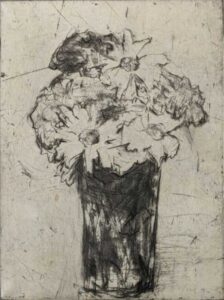
Nobody
Today
I mourn the idea of the perfect body
The body I’m told I’ll get from those 2000s
dieting books
With measuring tape swirling around the woman’s body
Like a Fairy Godmother’s magic
I just learned
We don’t have control over our bodies
If we go up a jean size
If we get cancer
If we are found attractive
If we like tomatoes on our sandwich
What if
We fall in love
The dosage isn’t enough
We’re wired for math and not english
And we don’t have a choice
No
Body
Is ever satisfied with what they’re dealt
Shabnam Samuel Thakar
A Name
For the first time ever, I fear my name. I fear the origins and the roots of my name. I fear the
sound of my name. I fear what my name sounds like to a stranger. The stranger who associates
foreign names with a foreign faith. Growing up in India, I had never lived with a fear of my
name. Embarrassed, maybe at times, because of my need to blend in, but never afraid. Never
afraid, like I am now, that at some check point, that at some reentry point, my American
passport will not mean anything, to bring me back to my adopted country of the last thirty
years. Afraid that if I leave and go somewhere, I will never be able to see my son again. My
home of thirty-seven years no longer feels a safe haven to me. Afraid, that if I happen to get
stopped and I am asked to show my driver’s license, my name, would be enough to find me
guilty.
Growing up I wanted typical Indian names. Each name, like most Indian names, had Indian
mythological roots and had a different story behind them. Each name telling the world of their
heritage and the region they come from. I never did want the name Shabnam. It did not allow
me to blend in. Blend in with the majority of my friends who had “typical” Indian first names
and last.
In a country like India where a name can tell the state, religion, what kind of food you eat, what
kind of clothes you wear, my name was a misnomer. Shabnam Samuel: Shabnam, meaning Dew
Drops in Persian, is a common name for people of the Muslim faith. So automatically, I was
asked if I was Muslim, but then Samuel. Are you a Christian?
My dad was a six-foot tall Indian, who fought in the first two world wars, my mother, who was
short and stocky had blue eyes, wore a dress, and spoke no Indian dialect or English at that, was
from Urmia, now in Northwestern Iran.
This symbol or mark of our names that we as Indians carry with us is indicative of how a person
or individual is presented to society. We identify as a whole with the region we come from, the
food we eat, the language we speak, the state cultures we grow up with and every stereotypical
assumption that comes with it. With the name I had, I could never identify to any particular
region. A person’s geographical coordinates are gauged by their first and last name.
I could go on all day about how we pick and gamble on people’s identities in India and as
Indians. What if we haven’t identified or lived up to the indicators from a particular region?
What if you were born into one state and lived in another state, does that make you a traitor? A
lot of blending in has happened in the past few years but we still have a long way to go, where
our first name and last name, will be just that, without the burden of state, language, religion
and culture.
Yet, in a regionally diverse country like India, there was never fear. My Assyrian mother made it
her home for seventy years, without an ounce of discrimination or fear. Never once did she
encounter anyone that would tell her to go back where she came from.
India might have had its own cultural distinctions and limitations but never was there a cloud over your head that said,
you could not live here, you could not come here, or you could not go there.
There was no fear of being separated from your family,
or that there might be a chance you would never see them again.
Thirty-seven years ago, I left my home in India, the one that had borders of state, religion,
language and food, to come to a country that was known for its wide embracing arms. Arms
that reached out to people who came here in search of opportunities, a better life, hope that
they would find a voice, or whatever the reason. They/we were coming to a country that was
based on the theory that everyone was created equal. I came here, because of my need to find
my voice, the need that most of my generation of women in India did not have. The
opportunity to be a woman, the opportunity to live as an individual and the opportunity that
America gave people: to be who they are. That was every immigrants dream;
Today that dream seems to be in jeopardy. The foundations of those dreams seem to be
shattered. Today, I am afraid to even voice my name. Today, I am afraid of my name.
Nancy Luse
A Good Time Was Had By All
Between her constant tea parties, suppers and sharing her homemade cakes around
town, Gladys Foster had most people in Maxwell Corners fooled into thinking she
was a nice person.
The devil’s food, red velvet, pineapple upside down and, of course, the lemon
chiffon routinely showed up on people’s side porches when they suffered a death in
the family. It was the 1950s, when most women stayed home, giving them the
chance to comfort the bereaved with homemade fried chicken and deviled eggs.
But it was Gladys’s cakes that always appeared first.
A tall woman with tightly permed hair that was never out of place, Gladys’s thin
figure pointed to the odd fact that the baker rarely tasted her handiwork. She
always served herself the tiniest sliver, protesting that she wanted others to enjoy
the swirls of chocolate frosting or the tender yellow cake with pineapple rings and
maraschino cherries glistening with melted butter and brown sugar.
She pulled out all the stops at Christmas, baking dozens of snickerdoodles, raisin-
filled and chocolate chip cookies to gift the mail carrier, milkman and the woman
who permed her hair. The shut-ins from the Lutheran church looked forward to the
sweets, which made it easier to put up with the Luther League teenagers, who
showed up with the pastor for a visit. The kids slouched on the sofa, silently staring
at their shoes while the pastor droned on, making the old folks fidget over missing
the Ed Sullivan Show.
In addition to her productive kitchen, Gladys had one of the prettiest gardens in
Maxwell Corners, with tulips and daffodils in the spring, followed by iris and
larkspur, then summer’s cosmos and zinnias, until finally the chrysanthemums,
which put on the last great show of the season.
Barely a weed survived her eagle eye and as soon as the petals dropped from the
roses, she was out there deadheading with a pair of clippers. As she passed by a
patch of petunias in a neighbor’s yard, she was known to take it upon herself to
pull their weeds.
When she won yet another blue ribbon at the county fair for her dahlias, she’d
lower her eyes and appear all demure, but it was yet another trick for fooling
people into thinking she was sweet, according to the kids of Maxwell Corners.
They were on to her deceptions. They knew she had a dark soul, covered over by
false sunshine. What kind of nice person gives out apples and little boxes of raisins
instead of Three Musketeers or Mallow Cups to trick-or-treaters on Halloween?
Where were those dang cookies?
And then there was the time Tim Morgan was listening in on the party line and
heard her calling the town maintenance office to send the cinder truck to her street
after a snowstorm, ruining the best sledding trail in town on a day they cancelled
school.
Mrs. Foster’s biggest sin, however, according to the kids, was the way she treated
her brother, Lemuel Owens, making him sleep in the wooden shed with the
corrugated metal roof in the backyard next to the alley. He could be found back
there at different hours of the day or night incinerating trash in the rusty burn
barrel, stirring up the flames and shooting sparks into the air with a beat-up hoe
that was charred on one end. One kid cruising the alley swore the old man was
shackled in chains and it stood to reason that his mean and nasty sister held the key
to the padlock.
The town’s labyrinth of alleys was a kid’s paradise. They were a shortcut to school
and a good way to snoop into the lives of the neighbors, whether it was seeing
Letty Walker’s enormous bloomers flapping on the clothesline or fixing on the
number of beer bottles filling up the trash barrel of Buster Krebb, who ran one of
the town’s gas stations.
Kids didn’t hesitate to run the other alleys around town but seldom traveled alone
when it came to the section behind the Foster house. If Lemuel was sitting on his
busted-up kitchen chair and noticed them walking by, he would leap to his feet,
vigorously shake his hoe and let loose with a long trail of gibberish that made no
sense except maybe to him.
“Tit for tat. You kill my dog; I’ll kill your cat. Woof-woof, meow, meow. He-haw.
Ollie, ollie in come free and do-si-do, swing your partners,” Lemuel raged. “You
sons of bitches, no good rotten kids.”
“Woof-woof, now spin around four times.” Lemuel followed his own directions,
slightly dizzy after the third spin. “This is MY alley, you hear me? Don’t be telling
me this ain’t my alley because it IS my alley from now until the cows come home.
You hear me? You snotnose, big-eared little bastards you.”
By this time Lemuel would be played out, flopping back down on his ripped vinyl-
covered chair. The kids, frozen in one spot, their eyes wide open, their chins
dropped, would suddenly remember their legs and feet, and tear off for home,
hearing Lemuel in the background wheezing and hollering in a combination of
crazed laughter and an even longer string of curse words.
After one such encounter, a group of kids, Willie, Sue, and Eleanor Burkholder,
along with their cousin, Steve, gathered under a crabapple tree in their
grandmother’s yard to discuss Lemuel.
Willie picked up a crabapple and whipped it at Steve, who winced, rubbed his arm
and threatened to retaliate. “Knock it off, you jerks,” Sue yelled. “I think we might
have just escaped with our lives.”
“Maybe so,” Steve said. “But you notice how Tater never barked once while we
were standing there and he barks at everything. Tater knows if someone’s a good
person or not. If Mrs. Foster had been there, he would have gone for her throat.
She hates dogs, she’s always chasing them out of her flower beds.” Tater, a mixed
breed that was mostly terrier, but also had the looks of a hyena, wagged his stumpy
tail and gave a dog smile.
“What do you think makes him act like that?” Sue asked.
“Tater?” Steve asked, puzzled.
“NO!” Sue exploded. “That crazy old man!”
“I think his nerves must be shot, that’s what I think,” Willie said. “Dad always says
his nerves are shot when he comes home from work. But what kind of work does
Lemuel do aside from burning trash?”
“What are nerves anyway?” asked Eleanor, who was the youngest Burkholder
offspring. “Is it like when a cat gets his fur all bushed out and hisses?”
“I think it’s more like a grown-up’s problem,” Steve said, scratching the top of
Tator’s head. “Do you have bad nerves, fella? No?” They all agreed Tator looked
perfectly stress free.
“Did you notice if Lemuel was wearing his chains?” Willie asked.
“I didn’t see any,” Sue replied. “I guess Mrs. Foster was feeling generous or
something.”
Their grandmother stood at the back door. “You kids want a slice of bread? It just
came out of the oven.” Lemuel was all but forgotten. Besides, the kids never talked
about him to the adults, who’d just say they were imagining things and to just
leave that poor old soul alone.
At Buster Krebb’s garage a group of regulars leaned against the pop cooler or sat
on stacks of tires. They liked to hang around and shoot the breeze as Buster
tinkered under the hood or dashed out to the gas pumps when a car pulled in. He
didn’t mind the loafers; they provided some good company and helped out when
he needed an extra hand to keep the car wires separated.
“Hey, Lemuel Owens stopped in here earlier today,” Buster said during a break in
the conversation, his jaw clenched on a cigar stump that had long gone out. “You
hardly ever see that guy outside his yard, but he needed a can of gas to start some
stuff in his burn barrel.”
“It’s sure a shame about him,” one of the men said, shaking his head. “They say he
was just a regular, normal guy until he got kicked by a horse and fell and hit his
head on a fence post. It scrambled his brain, that’s for sure, but still, you’d never
meet a nicer person.”
“Unless it was his sister, Gladys,” Buster said. “She took him in and has been
looking after him ever since. Course she and Dick never had any kids, so she was
able to do it without much of a heavy lift.”
“Ump,” another of the loafers contributed. “What do you think possessed that
horse to up and kick him in the first place?”
“Got me hanging,” Buster replied, finally tossing his cigar stump in the trash can.
“You can never fully know the mind of animals. Take my cat. He’s always giving
me the side eye. I think he might be up to something.”
“Maybe he just wants to be fed, you stinkin’ tightwad,” one of the loafers chimed
in.
Across town on Maxwell Alley the Burkholder crew, along with their cousin and a
new kid in town, cautiously walked within spitting distance of the old man’s shack.
Lemuel was slouched in his chair half asleep, instantly rousing when Tator trotted
over and licked his hand.
“Jumpin’ Jiminy Cricket! That dog tried to bite me!” Lemuel cried out. “He’s a
man-eating monster and I’m going to throw him in my burn barrel if you brats
don’t get out of here!” He reeled off a string of obscenities as the kids high tailed it
down the alley and the new kid realized he had wet his pants.
Gladys, who was in her flower garden trying to corral a patch of wayward Shasta
daisies, caught the tail end of her brother’s outburst.
She sighed, removed her gardening gloves and ran a hand through her permed hair, looking in his direction.
What in the world caused that mean streak in him from time to time? For years she
had tried figuring it out, seeking out magazine articles and newspaper stories that
might offer a clue. His agitation was never directed towards her or Richard, and he
was such an introvert that he seldom interacted with others around town.
Was it that nasty accident with a horse? Would that make him act out of sorts?
Some people thought so.
Gladys bent over to snag a weed and recalled her latest tea party and how one of
the women talked about her son being bullied at school. Maybe that was it, a bad
experience held over from Lemuel’s childhood. Or perhaps their parents had been
too rough on him.
She strolled down through the yard. “Lemuel?” she called out. “Were you bullied
as a child?”
“What?”
“Did the kids pick on you and call you names?”
“No, I don’t think so.”
“Well, then, I know Mother and Daddy were sometimes strict, but you knew they
loved us, don’t you?”
“I knew that.”
“Then help me to understand why you get so upset at those children when they
walk through the alley.”
Lemuel hesitated, shrugged, and looked thoughtfully at his sister before finally
answering. “I just don’t like kids.”
“What? Not like kids? Why not?”
“I just don’t.”
“What did they ever do to you?”
Lemuel thought for a minute. “I don’t exactly know, but it was something.”
“So that’s it?”
“Yep, pretty much,” he said, turning back to poking the fire with his hoe.
Gladys didn’t quite know what to say, so she circled back to what she knew best—
the answer to all of life’s ups and downs. “Why don’t we just go inside, Lemuel,
and I’ll cut you a nice piece of lemon chiffon cake. But first let me take those
chains off your feet.”
Jack Lynch
An-Ti-Quees
“The Bible says at the end of the world, there’ll be one guy sitting alone surrounded by piles of an-ti-quees.” said Ron, who was a man in his seventies, white hair, what little he still had, combed over his bald spot on top, he wore green for the most part, some grey, t-shirts and such. He looked like he was fading out of existence. Except he’d allowed good cooking to fatten up his belly, bought larger pants, made a new hole in his belt, now even it barely fit.
Ron’s face had withered inward with age, the cheeks slack and hollow, forehead lined with the concerns of years it seemed. But it was a kind face all the same, familiar, you could almost see life lessons drawn on it.
“Uh, an-ti-keys?” Tommy, or was it Tommie, Ron could never remember, had to look at the bookkeeping and old checks to write it out, was a young twenties gay man, often in a sleeveless top to show off the muscles he was developing at the gym, and loosely worn beach shorts in bright neon colors. He sometimes clopped around the store in crocs.
Once Ron commented he looked like a rainbow and Tommy said, “I love you old man!” Ron just grinned but didn’t look directly over at him.
“An-ti-quees, spread the word out when you say it,” Ron said. You see, a young boy was riding with his family in the car, nineteen seventies, and they kept passing these road signs for an-ti-quees. So, he said, “Can we stop and get some an-ti-quees? I want to see what they are.”
“Aha, antiques! I get it.” Tommy chimed.
“Location.” Ron said, “We’re on a dead-end street, with railroad tracks behind, in an uninsulated building with no heat. So, we only open eight months a year. Good thing we’re close to the beach. Weather’s better and brings travelers.”
“It’s the death of antiques.” Ron added. “The well’s gone dry. I’m getting too old to care, if climate change doesn’t get us, then I’m ready for the nuclear fire to just wipe everything away. No more an-ti-quees, then.”
Tommy pursed his lips thinking he needed to say something cheerful, “Old man, you need to look on the sunny side. It’s easy to look around at all the bland sameness, the strips of fast-food places, empty parking lots…but see what’s hidden, the people who gather their families, the joys, the overcoming challenges.”
“You’re right Tommy.” Ron said. “I’m an old sour puss sometimes. Life’s still good.”
They watched the customers drift in, families with kids, couples where one seemed to lead and the partner seemed only slightly interested, pairs of older women who cooed over certain items and talked about things they had in childhood households.
“It’s like the African watering hole around here.” Tommy told Ron.
“What’s that mean?”
“All the different animals come here to drink, to simply survive, others to kill.”
“Ah. Yep, some chase dreams, others holding on to memory, objects can be things that bring comfort I guess.” Ron surmised.
“It’s magic.” Tommy added. “Alchemy. Stuff that might as well be trashed, rusting in a shed, attic, or basement, suddenly is transformed into value, rarity, a need to keep it.”
“Right. The stuff that dreams are made from.” Ron said. “Me, I’m mostly just glad to get a good night’s sleep, have a sandwich for lunch. Not have stress, no boss, not need to race around looking for things.”
“I don’t really blame them, everyone just wants to hold onto a little happiness.”
“Sure. Harmless happiness. Imagination of the past.” Ron added.
The big, two-story wooden structure had been a shipping warehouse along the railroad tracks, now it was a drafty cavernous space with neatly segregated squares of various curated items with paper price stickers tied on items with short strings. Everything had to have a price and a tag code, Ron put a sign up front telling customers he couldn’t sell anything without a price tag on it.
The big sign outside read, Clemmy’s Corner, an odd name, left over from the earlier owner.
Behind the store it was no-man’s land, a crumbling concrete loading dock and the whole area needed weed eating but nobody was going to do it, why bother? A couple of old fifty five-gallon drums were scattered back there by the brick pile and rotted crossties. Trash was blown around too, plastic soda bottles and scattered papers.
Garlic mustard filled the ditch line where oily stagnant water lay. Further back in the tree line Ron sometimes spotted high school boys after school sitting around and smoking pot. Even this far out from the beach, the land was swampy and soil sandy.
Beyond the tracks, a swath of forest was cleared and big metal towers carried high voltage electric lines, then farther back was a swampy field.
“A lady came in here in a bikini,” Ron laughed. “Big jugs, flipflops, just from the beach. It beat all hell!”
Tommy laughed. “I imagine you enjoyed that!”
“I said, thank you for bringing the beach to me! She just grinned and smiled.”
Ron had hired Tommy to help out with the store, but he never shared the story of how he found him lying near the railroad tracks, his clothes disheveled, dirty. Ron had heard around town the rumors of some activity out back there in the evenings. He had left his phone at the shop and stopped back by and just happened to walk out the back door and look.
Ron liked to go out there and listen to the Spring peepers. There was a seasonal swampy area past the big power lines.
The poor boy was beaten up, bruised, bloodied. Lying there, he might’ve just looked like a pile of refuse. Something somebody tossed away.
Spots of bright red blood dotted his shirt. He was breathing heavily and moaned when Ron touched his shoulder. Ron had to help him up. One shoe was missing from his left foot. Ron brought him inside to wash up at the sink. He never asked questions, just helped someone in need.
“You, ok?” Ron asked him.
“I’ll be fine, nothing new. Just a couple tearoom trade boys, can’t handle who they are.”
“I haven’t seen you around before.”
“No. I came here to get away from Mebane.”
“What was in Mebane?”
“Nothing good. Family.”
“I can call the Sheriff’s office.”
“No. I’ve been there before, reports, nothing happens. No gay-on-gay crime in North Carolina!”
Ron asked no more except, “Are you, perhaps, looking for work?” He just reacted, sensed the boy was floundering alone. The economy was not great, not in central North Carolina. The big employers were a chicken processing plant and a rendering plant.
Tommy’s face lit up, “A job?”
“Yeah. Here, at the antiques shop.”
“I’d love it! I need an anchor.”
“Got somewhere to stay?”
“A room.”
“Ok, good.”
Tommy had a cut lip, it looked pretty bad, so Ron told him it might require stitches and called a nurse he knew from church to come fix him up. While she tended to that, Ron went back out to look for the slip-on shoe he lost, and his glasses.
“How’s our patient?” Ron asked her when he returned.
“He’ll live to fight another day.” she said. She packed things back in her knapsack and left.
Ron had found the shoe and glasses and looked around but no evidence of what transpired. He brought them back. The home nurse had stitched up Tommy’s lip, “The stitches dissolve in time,” she said and left. They watched her walk towards the front where Ron had let her in the shop.
“You’re a church guy?” Tommy asked him as he sat touching his swollen lip and the stitches
New Covenant.” Ron said.
“Jesus?” Tommy asked tentatively.
“Jesus.” Ron said firmly and with little overt emotion.
“Faith?” Tommy asked.
Ron thought a moment about that, no easy answer, “Faith’s a funny thing, it doesn’t show, only you know you have it. And it’s fragile, it can come and go, can disappear completely.”
Tommy tried to smile, but winced, the lip sore and hurting.
A few weeks in, Tommy began to open up a bit, talked about growing up in Mebane and feeling he did not fit in. He left because he couldn’t get along with his stepfather.
“Why not?” Ron asked him.
“Obviously, I’m gay!” Tommy said.
“Yeah. I kinda know that.”
“Oh, well good. And you’re all-right with me then?”
“No problem. Everyone’s got to be just who they really are.”
“Thanks! For everything. I really mean that.” Tommy said then.
They got along famously after that.
Clemmy’s was more of a tax write-off than a going business concern. Tommy asked Ron when he first came on board why it was called Clemmy’s? “Some Mama’s boy who was a pack rat cleaned out his garage and started it.” Ron said. ”He was named Clemmy.”
Portersville had few other attractions, especially for travelers on I-64. But it did have an Iron Skillet restaurant with golden fried chicken. The Main Street was pretty much like a million others in America, just with a touch of North Carolina decrepit, cracked glass storefronts and disintegrating brick walls, Tarheels decals stuck on street signposts and light patches of spray painted graffiti.
“There’s not much sadder than a town that’s dried up because a stretch of sand is a better place to be.” Ron told Tommy. The relentless sun was turning everything a dull sepia where once it had bright colors and families and happiness walking the streets on a Saturday.
Tuesday at the store, Tommy had a friend drop by, they walked around laughing and talking. The other boy had spiked blonde hair standing up at center like a Mohawk haircut. Ron watched from a distance, at first thinking nothing of it. Then he thought he saw something, a slightly furtive hand movement from the other boy.
After the friend had left, Ron approached Tommy. “I hate to say this, but I’d appreciate it if you didn’t ask him to come by here again.”
“Why?”
“Well, I’m not certain. We don’t have cameras here, but I suspected he stole something. I’m sorry.”
“That Bitch!” Tommy declared. “I’m not surprised, but I didn’t see it. Probably thought it was funny, or something.”
“It’s ok. Live and learn.” Ron said.
“I’ll find out!” Tommy said then.
“You don’t have to get into the middle of it, we’re not sure.”
“Oh, I’ll ask him. Sure enough. If he admits it I’ll bring the item back.”
Tommy sulked around the rest of that day.
Holiness reigned on a Sunday morning, but now several denominations had shuttered, and Unitarians had a second story above a storefront. “Carpetbagger religion!” Ron told Tommy. “From New England -Transcentalists!”
“Transcendentalists.” Tommy corrected but Ron paid no mind.
One day Ron handed Tommy his check and watched him stare at it glumly. “You know there’s an old fellow at the church, probably could use some help, errands and such, housekeeping. Bet he’d trade a room for your assistance.”
“A sugar daddy?” Tommy replied incredulously.
“No. Doubt that.” Ron said, “I’m your sugar daddy!” Tommy roared with laughter then.
Tommy showed up one day riding a pink girl’s bicycle. “What the hell?” Ron asked. “Pink!”
“Sure.” Tommy said, “I represent.”
“Yeah, you’re a damn billboard boy.” Ron replied. “And it’s a girl’s bike!”
“Yeah, I might get a white wicker basket for the front handlebars, with plastic flowers on it.”
“Even God’s gone to hell!” Ron had commented to the Rotary Club members; the few ones left at meetings. Nobody joined anymore, the American Legion dying off, the Country Club looking shabby and the golf course downrated, greens didn’t have a good roll of the ball anymore.
Out the window of the meeting a group of motorcycles roared past, the riders wearing blue jean vests with colors. So many storefronts were boarded up, the town made them be painted white to hide them.
A large blue step van Taco Truck, Tarheel Taco, parked right downtown weekdays and out at the rodeo on weekends. Hispanic workers from the poultry plant lined up at lunchtime.
“When I was young, all I could think of was to drive to the beach!” Ron told Tommy. “I had girls around me like you wouldn’t believe. Like flies to honey! Heard of the Shag? That was the music and the dancing.”
“I went to the disco club down at the beach and it was the same way; except I was surrounded by men!” Tommy said.
“To each his own, I guess.” Ron said in reply.
“Oh Ron, you’re just too sweet!” Tommy said, pursed his lips and tapped Ron on the shoulder twice, making Ron look at him, and they both laughed.
Ron Thomas lived just down the street from the store, in a white bungalow with big blue hydrangea bushes around the porch and reddish crepe myrtle trees along the driveway between his house and the neighbors. He went home for lunch and Rosa had tomato soup and a toasted cheese sandwich ready for him at 12:30.
Rosa was a hearty woman, she had grown wider and thicker in her legs and hips than when she and Ron dated years before, he liked to remember her bikini days when they ran along the waves like the Don Henley video for the Boys of Summer.
Those days faded away with every crashing wave and now the beach felt to him like a gray expanse with hurricane warning flags flapping in the wind. When that happened, the hotels boarded up lower windows and moved cars a couple blocks away from the structures. Some of the beachfront homes, big mansions, had crumbled down and washed away.
“One day we’ll be beachfront.” he said to Rosa.
“We’ll be long gone!” she replied. Rosa wiped her hands on a dishrag she carried.
Ron used to drive up North and down South, picking antiques to sell. Baltimore had been good for Mid-Century Modern pieces, jars and bottles and ceramics. Pennsylvania had tin wares and baskets and Amish wooden stuff.
Alabama was the gloryhole, old paper and outbuildings full of relics of earlier times, Ron visited the grave of Hank Williams in Montgomery and found blues records and loads of country albums. “Sweetly sweaty and redneck.” he told Rosa.
Nowadays little seemed to be left and new stuff would never be worth anything, cheap and plastic and imported by millions of pieces. He didn’t do those drives anymore; the trucks made the busy highways too unsafe. Now they were double tandem.
He had liked going up through the Shenandoah Valley at one time, avoiding I-81 for the old Route 11. Passing remnants of motels and diners and decaying farm structures, Civil War sites and farm stands. There were still neon signs, mostly not working anymore. Cute little towns that still looked well-kept and polished.
Picking up the AM radio stations along the route, local voice ads and old-time music from Pearisburg, Va. The rusted scenes of the past, now retro, life had a romantic quality for him.
“Are you going back to the store today?” Rosa called from the doorway to the living room.
Ron was dozing on the big leather easy chair, kicked back, snoring when she looked in. He gasped, awakened startled, “What’uh?”
Rosa stood staring at him. At least his heart still beats soundly.
“Oh, the shop.” he said. “Yeah. Tommy’s expecting me back.” He looked at Rosa. She wore an old bluish dress and an apron with cherries on it. Still had curly hair, just whitened now. The apron design reminded Ron of an old flour sifter pattern. He’d sold several and recalled them from his grandmother’s kitchen.
“Maybe I should just leave the door open there tonight and put up a sign, Free. Come and take whatever you want. Might draw business.”
Rosa rubbed her hands together, they were always wet, she was always doing dishes or cleaning around the kitchen. While he ran the shop, she tended to the garden, big heirloom tomatoes and zucchini squash, beets and greens. “Supper will be ready at six,” she said.
Sometimes after supper, Ron would join her hoeing weeds in their garden plat, his old hoe was plumb worn out, just a size of a large serving spoon now and the square end worn down to a perfect oval. “Works well, right size to get the roots out without chopping the plants.” he told Rosa.
“Remember Harker’s Island?”
“Of course.”
“Didn’t we wonder if Little Ron was conceived there?”
“The waves were crashing on the beach really hard, and a storm was coming up.”
“There was no one else in sight.”
Rosa put her hands on her hips and sighed. “We’re still living a good life.”
“Yes. We are, aren’t we?” Ron agreed, lingering on their memories.
“You should go out on a bluefish charter trip again,” Rosa suggested.
“The an-ti-quees are calling,” Ron said then, not wanting to imagine the sun and the waves rolling the boat. He puked chum overboard every time he went out on the ocean.
That evening, sitting on the front porch Ron smoked his pipe, watching neighbors walk by on the street, some couples holding hands. He had cleaned out the pipe bowl with a little tool and a reamer that smoothed and carved out some of the black tar buildup along the sides of it so it would smoke and breathe lighter. He stuffed the bowl with fresh pipe tobacco, and it darkened his fingertips, he brought his forefinger up to his nose and smelled it deeply, a cherry scent. Rosa liked the cherry fragrance.
“You know that’s not good for you,” Rosa said, leaning out from the screen door for a moment to check on what he was doing. He glanced at her but said nothing, time does that, couples can sit side by side without a word for hours, knowing one another’s thoughts, faults, feelings. Devotion weathered all their storms.
In the yard Rosa had requested he partially bury a large old tractor tire, inside she placed a flowerbed. The tire treads were thick and heavy, Ron whitewashed it with simple lime mixed with water and also the stones that made up the walkway to the porch and front door.
The flowers bloomed all summer and attracted butterflies and bees. Folks used to whitewash the bottoms of tree trunks along the roads so car headlights would light them up brightly and they wouldn’t swerve off the road and crash into them. A car had taken out one of their crepe myrtle trees.
The folks walking by would wave and call out to them, Rosa would say, “Nice evening, isn’t it?”
At eight o’clock Ron took his white oval nitroglycerine pill, reducing his vaguely and ever present angina and his metoprolol, popping his heart back into its proper rhythm. The town was not falling apart, even if the cars on the highway bypassed it, as long as a couple human beings lived there and cared for one another. Everything stood in its proper place, and he was just happy to be alive.
Acknowledgements
FAC Board of Directors
Linda Roth
President
Jillian Deshazer
Vice President
Sharon Kuebbing
Secretary
Chuck Mann
Treasurer
Yvonne Reinsch
At-Large
Ann Casso
At-Large
Dijahana Beaudry
John Connors
Kathleen Costlow
Russ Hodge
Mark Lancaster
Angela Mayer
Owen Wallace
Leslie Powell
J.T. Smith
Andrea Snyder
Jerry Donald, Liaison
Sarah Hempel Irani, Liaison
FAC TEAM
Executive Director
Louise Kennelly
Director of Operations
Gabriella Smith
Communications & Events Associate
Carmen Zdanis
FAC Facilities Technician
David Dooley
FAC’s Sky stage Sound & Light Engineer
Logan Waters
Volunteer
Maura Parrott